
Cryptogram · Cryptoquote Game
Razzle PuzzlesWord
4.53.71K Reviews
- Version
- 1.90
- Installs
- 500.00K
- Age Rating
- Everyone
Screenshots
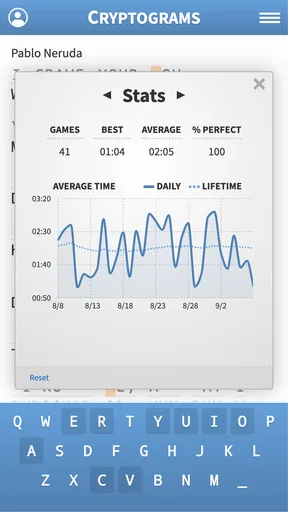
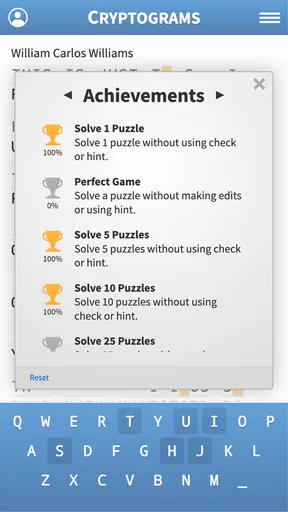
Our Review of Cryptogram · Cryptoquote Game
 Analysis by Appyee
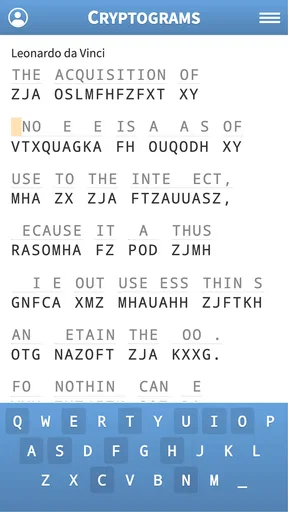
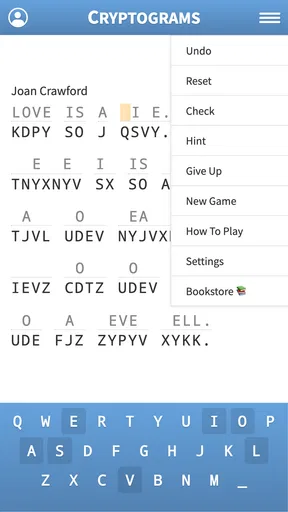
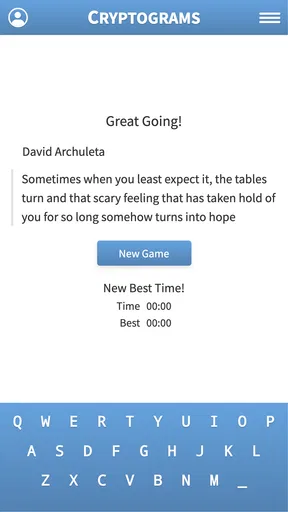
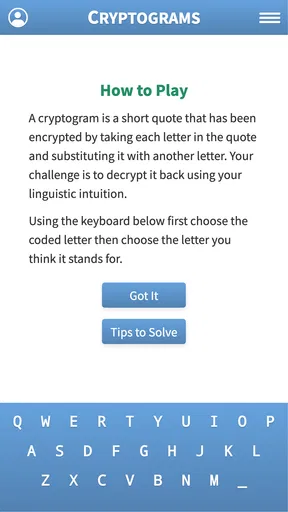
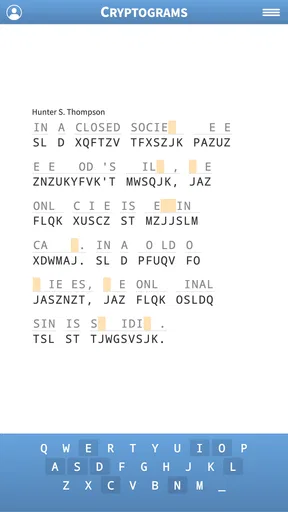
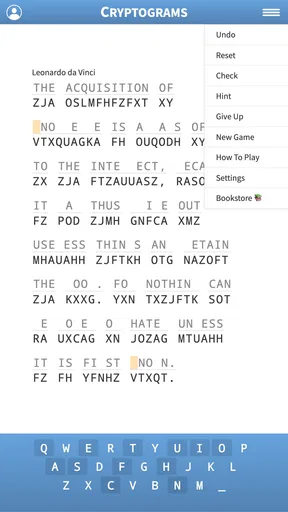
I approached Cryptogram · Cryptoquote Game as the kind of word puzzle I could open for a few quiet minutes, rather than as a game demanding a long session. Its basic idea is simple: a quotation appears with its letters replaced by symbols or other letters, and I work out the hidden message by spotting patterns. That simplicity is also its main strength. I can begin immediately, stop after one puzzle, and return later without needing to learn a complicated rule set.
My overall impression is positive, especially for anyone who enjoys language puzzles more than fast reactions. Razzle Puzzles has kept the focus on decoding, so the experience feels closer to solving a compact paper puzzle than playing a conventional mobile game. It is free, rated for Everyone, and the current version is 1.90. The game has built a sizeable audience, with a 4.5 average from around 12 thousand ratings and more than 500 thousand installs, which matches my sense that this is a familiar, straightforward choice in the word-game category.
Where the first puzzle can feel harder than expected
The opening obstacle is not installation; it is understanding how to read a cryptogram efficiently. A beginner may look at the scrambled text and try to guess the quotation from its meaning. I found that approach unreliable. The more useful starting point is structure: a one-letter word is often “a” or “I,” repeated symbols usually represent repeated letters, and short words can reveal common combinations. The puzzle becomes much less intimidating once I treat it as a pattern problem rather than a trivia test.
That distinction matters because the game rewards patience more than broad general knowledge. Recognizing a quotation can help, but I do not need to know every author or famous line to make progress. I can build the answer from repeated letters and word shapes. On the other hand, someone who dislikes uncertainty may find the early stage frustrating, especially when several possible letters fit the same pattern. The game does not turn that ambiguity into an action challenge; it leaves me to reason through it.
A practical mistake is filling in letters too quickly. When I commit to a tempting guess, that guess can distort several words at once. I get better results by testing a letter against every occurrence before deciding that it belongs in the puzzle. This is one of the less obvious lessons of the game: the fastest route is often to slow down during the first few deductions.
Another point of friction is the difference between a genuine deduction and a familiar-looking phrase. If a line resembles something I have heard before, I may try to force the remaining letters to match my memory. That can waste more time than starting from the visible pattern. I recommend using recognition as a confirmation tool, not as the first and only solving method. This keeps the experience satisfying even when the quotation is unfamiliar.
What to check before blaming the game
Because this is a compact puzzle title, setup should be uncomplicated. The important compatibility check is the operating system: the game requires Android 6.0 or later. If it does not install or open properly, checking the device version is a sensible first step before assuming the puzzle itself is broken. That is especially useful on an older phone or tablet that still runs other applications but no longer meets a newer app requirement.
I would also make sure the installation has finished completely and that the device has enough ordinary working space for the app to launch comfortably. These are general checks rather than special requirements of the game, but they prevent a common mistake: treating a stalled download or an unstable device as a gameplay problem. Closing other demanding apps and restarting the device can also separate a temporary system issue from a genuine app issue.
The game is free, so the decision to try it is relatively low-risk. Still, “free” does not automatically mean it will suit every player. Someone looking for a large adventure, elaborate progression, or a social competition should set expectations correctly. This is a focused word game, and its appeal comes from solving individual cryptograms, not from surrounding spectacle.
Its Everyone content rating makes it approachable for mixed-age households, although younger players may need help with vocabulary, quotation style, or the idea of substitution itself. I would introduce it as a shared reasoning activity rather than hand it to a child expecting a colorful arcade game. An adult and child can discuss why a repeated pattern suggests a particular letter, which turns a difficult puzzle into a useful language exercise without changing the game’s core design.
A simple recovery routine when a puzzle stalls
When I reach a dead end, I avoid repeatedly tapping guesses at random. I first scan for the shortest words, then mark repeated groups, and finally look for common word endings. If one assumption creates an impossible-looking word elsewhere, I undo that assumption mentally and test another letter. This workflow is more dependable than chasing the most recognizable phrase in the quotation.
A helpful routine is to divide the puzzle into three passes. In the first pass, I identify letters that seem certain. In the second, I use those letters to narrow down neighboring words. In the third, I revisit the uncertain characters and see whether the completed structure now makes them obvious. This approach is particularly useful on a phone screen, where jumping around the sentence can make it easy to lose track of which guesses are solid.
If I have been staring at the same line for too long, I leave it and return after a short break. Cryptograms benefit from a fresh view because a pattern that seemed invisible can become clear once I stop forcing it. This is also why the game works well in short sessions: I do not need to finish a long campaign to feel that I have used it successfully. A single solved quotation can be enough for a break between errands or before bed.
For a realistic everyday example, I could open it while waiting for an appointment with only a few minutes available. I would begin by solving the obvious short words and repeated letters, then stop if the remaining section required more concentration. Later, I could continue with the same puzzle instead of starting a completely different activity. That makes it more practical than many word games that depend on a continuous streak or a large time commitment.
There is also a useful trade-off in the game’s narrow focus. Since the central task remains decoding quotations, I can improve at the specific skill of recognizing substitution patterns. But if I want several unrelated puzzle formats in one application, this title may feel limited. A crossword collection offers clues and intersecting answers; a word-search game emphasizes scanning; a daily guessing game often adds a social or timed routine. Cryptogram gives me fewer kinds of interaction, but the one it offers is more coherent.
When the app is not the cause, and who should choose it
Not every interruption is caused by the game. If the app closes, freezes, or behaves oddly, I would first check whether the rest of the device is also sluggish. Restarting the phone, reopening the game, and confirming that the operating system meets the requirement are sensible general steps. If other apps are failing too, the wider device environment is the more likely place to investigate. That distinction prevents unnecessary frustration and avoids treating an ordinary phone problem as a flaw in a particular puzzle.
If the issue happens only after returning from a long period of inactivity, I would close the game fully and start it again rather than repeatedly tapping an unresponsive screen. If a download or update appears stuck, I would check the device connection and the normal app-store installation process. These are deliberately modest troubleshooting steps: they address common setup friction without pretending that the game has a special repair method or a feature I cannot verify.
For daily use, I think the best audience is someone who likes quiet concentration and wordplay. It suits a commuter who wants a short mental exercise, a puzzle fan who enjoys quotations, or a reader who likes discovering how language repeats and connects. It can also work for people who find timed games stressful because the central appeal is thoughtfulness rather than rapid tapping.
I would skip it if my priority were visual variety, character development, multiplayer competition, or a large collection of modes. I would also hesitate to recommend it to someone who strongly dislikes quotations or becomes annoyed when a puzzle requires several tentative deductions. Even though the rules are easy to understand, solving can still feel demanding when the sentence contains uncommon vocabulary or when several letters remain plausible.
Compared with a standard crossword, this game removes the support of crossing answers. In a crossword, one correct word can unlock several others; here, a wrong substitution can affect every occurrence of that letter. That makes the reasoning more global and sometimes more satisfying, but also less forgiving. Compared with a word-search puzzle, it asks for interpretation rather than visual hunting. Compared with a daily word challenge, it feels less tied to a single scheduled attempt and more suitable for solving at my own pace.
The developer, Razzle Puzzles, has positioned this release as a dedicated cryptogram experience rather than a broad puzzle bundle. That focus is valuable when I already know I want this particular type of challenge. It is less valuable when I am browsing for variety. I would choose it intentionally, not because I expect it to replace every other word game on my phone.
One of my favorite practical habits is to use the puzzle as a vocabulary check. When I encounter an unfamiliar word, I do not immediately treat it as an error; I examine whether the surrounding letter pattern supports it. That keeps me from “correcting” a valid quotation simply because the word is outside my everyday vocabulary. In this way, the game quietly rewards curiosity as well as deduction.
Another useful trade-off is screen size. On a larger tablet, the quotation is easier to inspect as a whole, which helps when comparing repeated patterns across distant words. On a smaller phone, the game remains convenient for short sessions, but I may need to move my attention back and forth more often. If I regularly solve long puzzles, a larger display is preferable; if portability matters most, the phone format makes more sense.
The version information is worth checking when troubleshooting: the current release is 1.90, and an up-to-date installation is a sensible baseline before judging stability. I would not treat an update number as a promise of a particular feature, though. The reason to install this game is still the core cryptogram activity, not an expectation of a broad redesign or a separate genre of play.
After using it, my verdict is that this is a good recommendation for a specific kind of player, not an all-purpose mobile game. I like that it gets to the word puzzle quickly, encourages careful deduction, and works naturally in short intervals. The free price and Everyone rating make it easy to try, while the 4.5 average and substantial install base suggest that its focused format has found a dependable audience.
My practical recommendation is to install it when you want a calm, quotation-based logic challenge, and to skip it when you need variety or constant action. Start with patterns instead of guesses, confirm the device meets Android 6.0, and give yourself permission to pause when a line refuses to open up. Those small habits make the difference between seeing a wall of symbols and seeing a solvable sentence. For me, that is where the game earns its place: not through unnecessary extras, but through a compact puzzle loop that remains rewarding when I approach it patiently.
Verdict
Strengths of Cryptogram · Cryptoquote Game
- Relaxing gameplay that works well for short breaks or longer sessions.
- Helpful hints make difficult quotes manageable without removing the challenge.
- Large quote variety keeps the puzzles from feeling repetitive too quickly.
- Simple interface is easy to understand for both casual and regular players.
- Offline play lets you solve puzzles without using mobile data.
Limitations of Cryptogram · Cryptoquote Game
- Some puzzles may feel frustrating when several letters have similar possibilities.
- Hints and extra assistance can make progress feel slower for free players.
- The quote selection may not appeal to users who prefer modern or niche topics.
- Repeated puzzle styles can become predictable after extended play sessions.
- Small text or controls may be less comfortable on compact phone screens.
Other Releases by Razzle Puzzles
View All
Fill-Ins · Word Fit Puzzles
Word4.7
Similar Picks in This Category
View All
Word Search - Word Puzzle Game
Bluetile4.8

Word Search Quest - Puzzles
Blackout Lab4.8

CodyCross: Crossword Puzzles
Fanatee, Inc.4.7

Words of Wonders: Crossword
Fugo Games4.9

Wordscapes: Word puzzle game
PeopleFun4.7

Word Search Explorer
PlaySimple Games4.9
Frequently Asked Questions
What is Cryptogram · Cryptoquote Game?
Cryptogram · Cryptoquote Game is a word puzzle app based on classic substitution ciphers. Each letter in a quotation is replaced with another letter, and your goal is to decode the message by identifying the correct pattern. The puzzles generally feature quotes from well-known authors, historical figures, and popular sources, making the game both a vocabulary challenge and a relaxing way to exercise logical thinking.
Is Cryptogram · Cryptoquote Game suitable for beginners?
Yes. The game is generally accessible to beginners because the basic objective is easy to understand, while the difficulty increases gradually as the quotations become longer or use less common words. New players can start by looking for short words, repeated letter patterns, and common combinations. With regular play, you will become more comfortable recognizing cipher clues and solving puzzles faster.
Can I play Cryptogram · Cryptoquote Game without an internet connection?
Many cryptogram games allow at least some puzzles to be played offline, but the exact availability can depend on the app version, device, and how puzzles are delivered. An internet connection may still be required for advertisements, synchronization, updates, leaderboards, or additional content. Before traveling or playing offline, open a few puzzles while connected and check whether the app continues working normally.
Does Cryptogram · Cryptoquote Game contain ads or in-app purchases?
The app may use advertising or optional purchases to support development, depending on the platform and current release. Ads can appear between puzzles or when you request hints, while premium options may remove advertising or provide additional benefits. Store listings should be checked for the latest pricing and purchase details, since monetization features and subscription terms can change after updates.
What are the benefits of playing Cryptogram · Cryptoquote Game?
Cryptogram · Cryptoquote Game offers a quiet, mentally engaging activity that can help improve attention to detail, pattern recognition, spelling awareness, and deductive reasoning. Solving quotations also exposes players to interesting ideas and memorable phrases. It is not a formal educational tool, but it can be a useful break from action-heavy games and is suitable for short sessions or longer relaxing play.
Play our best games!


